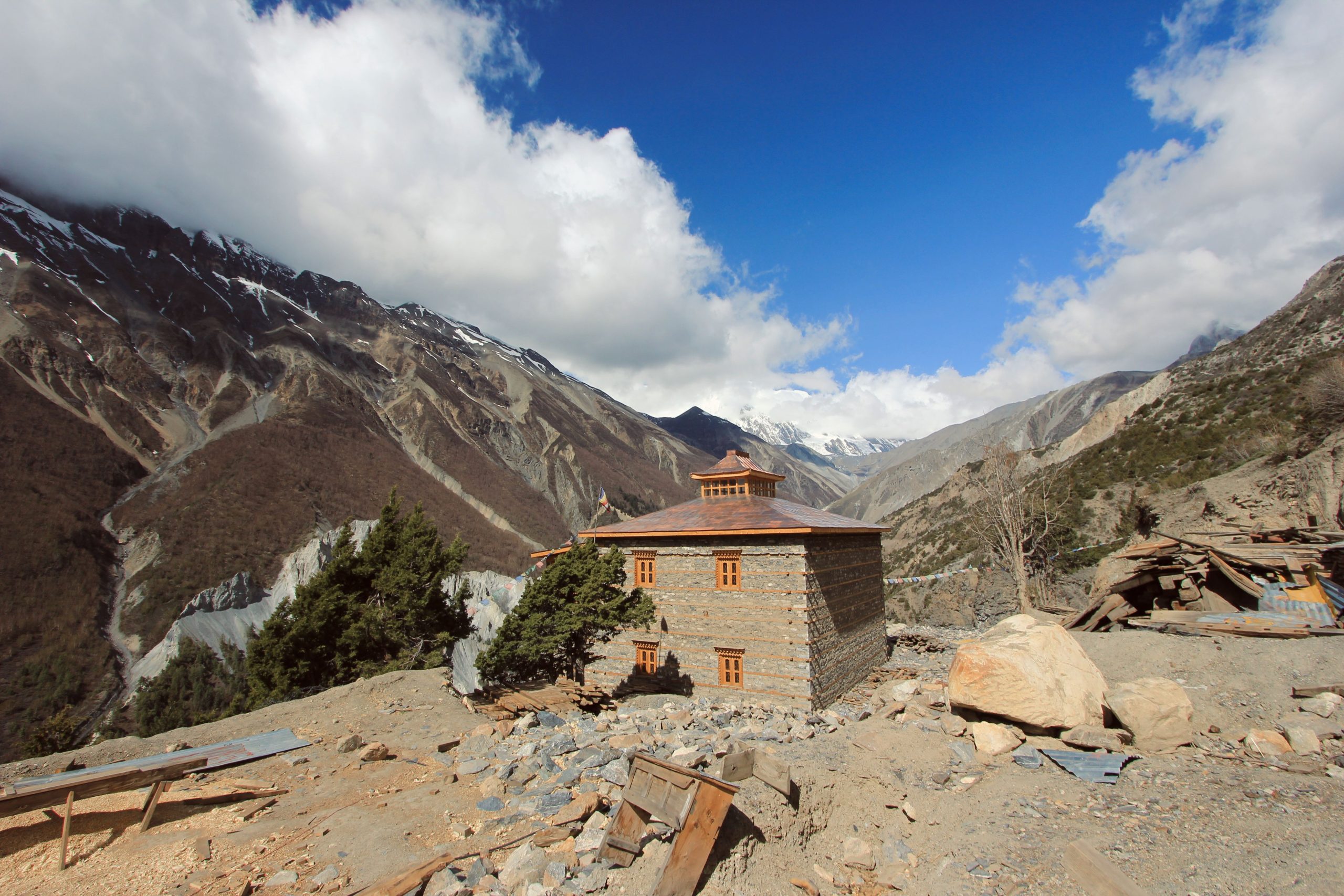
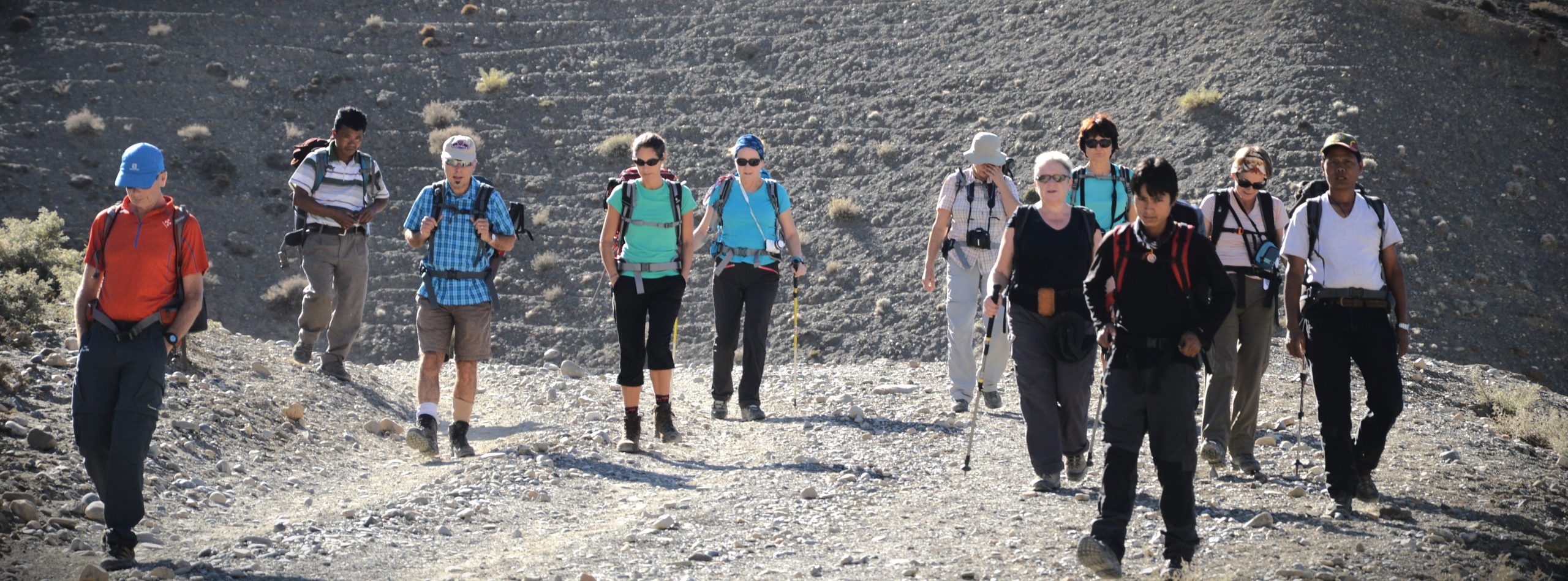
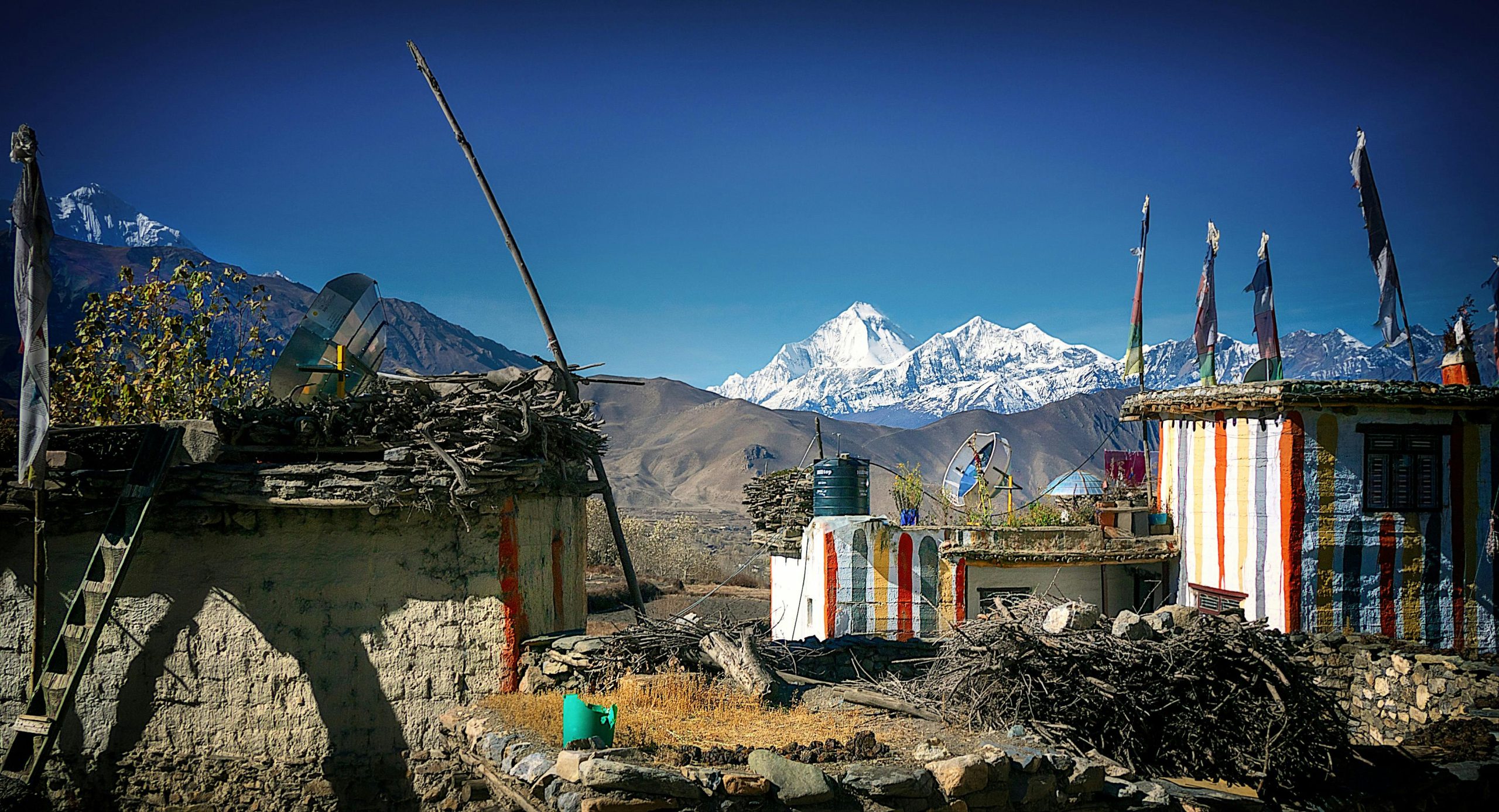
The Mustang Region is a hidden gem in northern Nepal, nestled in the rain-shadow of the Annapurna and Dhaulagiri ranges near the Tibetan border. Often called the “Last Forbidden Kingdom of Nepal”, Mustang has preserved its ancient Tibetan culture, monasteries, and traditional way of life, making it one of the most culturally rich and unique regions in the Himalayas.
Geographically, Mustang is divided into Lower Mustang and Upper Mustang. Lower Mustang is more accessible and includes popular sites such as Jomsom, Kagbeni, Marpha, and the sacred Muktinath Temple (3,800 m). Upper Mustang is a restricted area, home to Lo Manthang, the walled capital of the former Mustang Kingdom, offering visitors a rare glimpse into a well-preserved Tibetan Buddhist Kingdom.
The region’s landscape is stark, dry, and desert-like, with deep gorges, colorful cliffs, and panoramic views of towering peaks like Dhaulagiri, Annapurna, and Nilgiri. Despite its arid appearance, Mustang is culturally vibrant, with Thakali and Tibetan-influenced communities maintaining traditional farming, monasteries, and festivals.
1. Upper Mustang (Lo Manthang area)
- Location: Northern Mustang, high in the Himalayas, closer to the Tibetan border.
- Altitude: 3,000–4,500 meters.
- Key Towns:
- Lo Manthang – the walled capital, ancient royal city.
- Ghemi, Chhoser, Charang.
- Culture:
- Strong Tibetan Buddhist influence.
- Traditional lifestyle largely unchanged due to restricted access.
- Access:
- Restricted area — foreigners need a special permit.
- Trekking routes are limited and controlled.
- Landscape: High desert, cliffs, monasteries, caves with ancient art.
2. Lower Mustang (Jomsom and surrounding areas)
- Location: Southern Mustang, along the Kali Gandaki River valley.
- Altitude: 2,700–3,500 meters.
- Key Towns:
- Jomsom – administrative center, airport connecting to Pokhara.
- Marpha, Kagbeni, Tatopani.
- Culture:
- Mix of Tibetan and Nepali influences.
- More commercial and accessible than Upper Mustang.
- Access:
- Open to all trekkers; no special permit needed for most areas.
- Popular trekking routes like Jomsom-Muktinath trek pass through here.
- Landscape: Deep river valleys, apple orchards, villages, and monasteries.
3. Main Differences at a Glance
| Feature | Upper Mustang | Lower Mustang |
|---|
| Altitude | 3,000–4,500 m | 2,700–3,500 m |
| Key Towns | Lo Manthang, Chhoser | Jomsom, Marpha, Kagbeni |
| Culture | Tibetan Buddhist, traditional | Mixed Tibetan-Nepali, more modern |
| Access | Restricted, permit required | Open, easier access |
| Landscape | High desert, cliffs, monasteries | River valleys, orchards, villages |
Essentially, Upper Mustang is more remote, culturally preserved, and restricted, while Lower Mustang is more accessible, commercially active, and greener in parts. Many trekkers pass through Lower Mustang on their way to Upper Mustang.
 English
 Dutch
Dutch Japanese
 Korean
 Chinese

 Mail Support booking@mustangtrekkinginnepal.com
 Call Us 24/7 +977 9813 238901